Developing the Adaptive Meshing Capability for in:Flux CFD
June 23, 2020 · Oliver Heynes
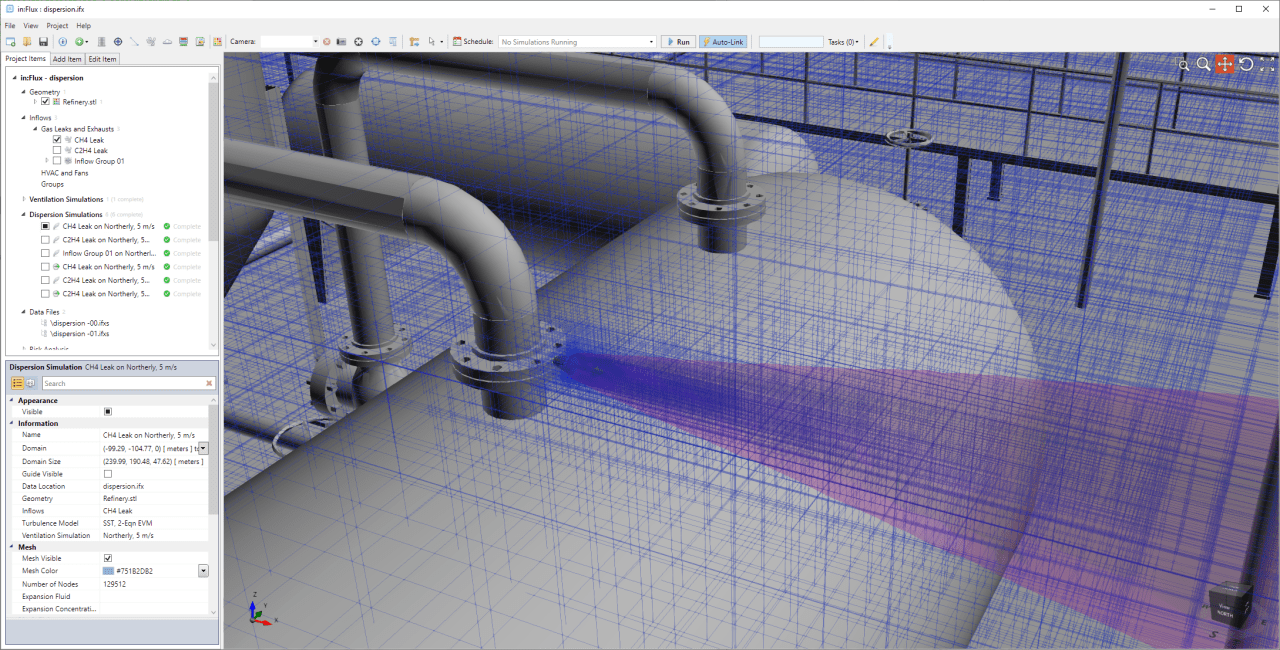
It’s not an exaggeration to say that in:Flux was conceived around one idea: automatic, adaptive meshing. Why?
Ask any CFD engineer about meshing and they will tell you it takes up most of their time. This is fine for small projects, but if the future of CFD lies in projects of several thousand simulations, then automatic meshing is the only option.
But it is not just a practical consideration. Meshing is a huge barrier for anyone who wants to run a CFD model. To know how to create a good CFD mesh is a skill that requires years of experience.
With in:Flux, that barrier no longer exists. The majority of our users never think about a mesh, allowing them to focus on the broader scope and objectives of the project itself. And the automatic meshes are better and more efficient than any I could have created based on my experience alone.
In the end, meshing did take up most of our time here at Insight Numerics. In the 5 years we have been developing in:Flux, about 60% of that time was developing capabilities around meshing. The results were worth it.
About the Author: Oliver Heynes

My passion for building intuitive software that brings insight to engineers was fully realized when I co-founded Insight Numerics. Putting CFD to one side, I developed Detect3D, a software program designed to position fire and gas detectors. As well as learning new programming languages, I also learnt that I had a passion for Entrepreneurship and Business Strategy. But my interest in CFD was always present, and in 2015 I envisioned a CFD product for dispersion modeling where the almost the entire process was automated. The vision became reality in 2018 when we released our second software product, in:Flux.